For several months of the year, Elgin homes stay closed against the cold, which means the same indoor air keeps circulating through the HVAC system. Dust, pet dander, cooking particles, dry air, and other airborne contaminants can continue moving through the home without adequate filtration or ventilation.
The price range is broad because indoor air quality equipment solves different problems. A basic media filter upgrade may start around $400, while individual whole-home systems can cost $500 to $3,000, depending on the equipment and installation. More extensive ventilation systems can reach $4,000 or more.
Elgin homes also have a specific concern that deserves attention: radon. Understanding the difference between filtration, purification, humidity control, ventilation, and radon mitigation makes it easier to determine which improvement addresses the actual problem rather than paying for equipment you don’t need.
In this guide, you’ll learn what indoor air quality systems typically cost in Elgin, IL, which options address specific air quality problems, what affects installation prices, and when a basic filtration upgrade may be enough versus when a larger whole-home system makes sense.
Key Takeaways
- Indoor air quality system installation in Elgin, IL typically runs $400 to $4,000 per system.
- Media filters and UV lights are the cheapest options; ventilators and dehumidifiers cost the most.
- Elgin sits in EPA Radon Zone 1, so air quality is a real health issue here.
- Elgin’s dry winters and humid summers make humidifiers and dehumidifiers popular local upgrades.
- Matching the system to your specific air problem matters more than buying the most expensive option.
What Indoor Air Quality Systems Cost in Elgin, IL
The term “indoor air quality system” covers several different pieces of equipment, and each solves a different problem at a different price. National 2026 pricing from Angi’s whole-house air purifier cost data lines up closely with Elgin-area quotes, since local installation labor tracks the Chicago-metro average. Here is the landscape:
| System | What it does | Installed cost |
| Media filter upgrade (MERV 13-16) | Traps fine dust, pollen, dander | $400 – $1,000 |
| Germicidal UV light | Kills mold and bacteria on the coil | $300 – $1,000 |
| Electronic / electrostatic purifier | Captures fine particles electronically | $600 – $2,400 |
| UV + filtration hybrid system | Combines particle capture and germicidal | $1,200 – $3,000 |
| Whole-home humidifier | Adds moisture in dry winter air | $500 – $2,500 |
| Whole-home dehumidifier | Pulls humidity in summer | $2,000 – $3,800 |
| Energy recovery ventilator (ERV) | Swaps stale indoor air for fresh | $2,200 – $4,000+ |
Two things to keep in mind reading that table. First, these are per-system prices, and many Elgin homes benefit from pairing two, for example a media filter for particles plus a humidifier for winter dryness. Second, the cost depends heavily on whether the equipment ties into your existing ductwork cleanly or needs modifications, which is the single biggest swing factor covered further down.
Why Indoor Air Quality Matters More in Elgin
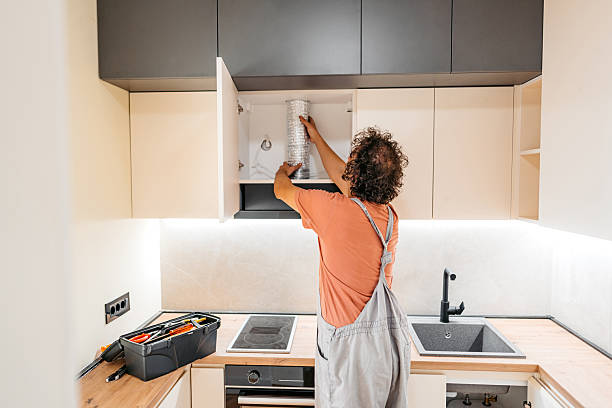
This is where local reality separates a real recommendation from a generic sales pitch. Three things about living in Elgin make indoor air quality a bigger deal than it would be in a milder, drier place.
Radon. Elgin sits in EPA Radon Zone 1, the highest risk category. According to the Kane County Health Department, the average radon test result in local homes is 4.6 pCi/L, well above the national average of 1.3 and above the 4.0 level at which the EPA recommends action. The geology of northern Illinois, with glacial deposits rich in uranium, is the reason. Radon is the leading cause of lung cancer among non-smokers, which makes indoor air a genuine health question here, not just a comfort upgrade. More on where air quality equipment does and doesn’t help with radon below.
Bone-dry winters. When the furnace runs for months, indoor humidity in an Elgin home can drop into the teens. That means cracked skin, static shocks, worsened respiratory symptoms, and even gaps opening in hardwood floors and trim. A whole-home humidifier is one of the most common winter comfort upgrades in this market for exactly that reason.
Humid, allergen-heavy summers. Summer flips the problem. High outdoor humidity plus Midwest pollen and ragweed means damp indoor air, dust mites, and mold risk, especially in basements. A dehumidifier or better filtration addresses the season most AC systems only half-solve.
Matching the System to Your Elgin Air Problem
The most expensive system is not automatically the right one. The smart move is to match the equipment to the specific problem you’re actually having, which is worth talking through with a technician during an indoor air quality assessment. Here’s the plain-language version of what each option is best for.
Dust, pollen, and pet dander: Start with a media filter upgrade to MERV 13-16, at $400 to $1,000. It’s the highest-value first step for most homes and captures far more than a standard one-inch filter. For heavier needs, an electronic purifier goes further.
Mold, bacteria, and that musty smell: A germicidal UV light installed at the coil, $300 to $1,000, kills microbial growth where it starts. It pairs well with a filter rather than replacing one.
Dry winter air: A whole-home humidifier, $500 to $2,500 depending on type. Bypass units are the budget choice at $400 to $800, while steam humidifiers deliver the most precise control at the top of the range.
Damp summers and clammy basements: A whole-home dehumidifier, $2,000 to $3,800 installed. It does what a portable unit can’t by treating the whole house and draining automatically.
Stale, stuffy air in a tightly sealed home: An energy recovery ventilator, $2,200 to $4,000 or more. Newer, tighter Elgin homes trap indoor pollutants, and an ERV brings in fresh air while recovering heat from the outgoing air, so you ventilate without throwing away your furnace’s warmth.
What Drives Your Installation Price
Two Elgin homeowners can get very different quotes for the “same” system, and it usually comes down to these factors.
Ductwork condition and layout: Equipment that integrates cleanly into existing ducts installs faster and cheaper. A home that needs duct modifications, a new drain line for a dehumidifier, or fresh ventilation runs for an ERV pushes labor up, sometimes by $1,500 to $3,000 on a ventilator alone.
Home size: A larger home needs higher-capacity equipment to treat all the air, which raises both equipment and labor cost.
System tier: Within every category there’s a budget-to-premium spread. A bypass humidifier and a steam humidifier both add moisture, but the steam unit costs two to three times more for tighter control and higher output.
Retrofit vs. new install: Adding equipment to an existing HVAC system is generally straightforward. Doing it as part of a furnace or AC replacement is often more efficient, because the technician is already in the system.
Ongoing costs: Factor in maintenance, not just install. MERV media filters run $30 to $80 a year, UV bulbs $50 to $150 every year or two, and dehumidifier filters $50 to $100. These are small, but they’re real, and a good installer will tell you up front instead of after the sale.
Radon in Elgin: Where Air Quality Equipment Helps and Where It Doesn’t
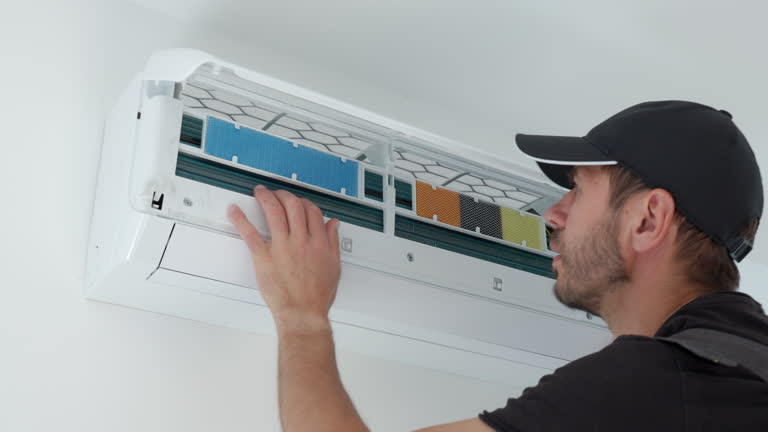
This deserves an honest section, because it’s easy to oversell. Given that Elgin is a high-radon area, some homeowners assume an air purifier solves it. It does not. Radon mitigation is a separate, dedicated system, typically a sub-slab depressurization setup that vents the gas from beneath the foundation to the outside, and it’s the only proven fix for elevated radon.
What indoor air quality equipment does contribute is dilution and general air health. An energy recovery ventilator increases fresh-air exchange, which helps keep overall indoor pollutant levels down, and better filtration handles the particles a ventilator doesn’t.
But the first step for any Elgin home is a radon test, which is inexpensive and the only way to know your level, since radon is colorless and odorless. If your test comes back at or above 4.0 pCi/L, you need mitigation, not just a filter. A reputable HVAC company will tell you that plainly rather than selling you an air purifier as a radon cure.
The reason to mention this at all: indoor air quality in Elgin is a package. Test for radon, mitigate if needed, then use filtration, humidity control, and ventilation to handle everything else the sealed-up seasons throw at your home.
Ongoing Costs and Financing to Plan For
Unlike a new air conditioner or heat pump, most indoor air quality add-ons don’t carry big utility rebates or the federal energy tax credit, since those programs target heating and cooling efficiency rather than air treatment. That’s worth knowing so a quote promising large IAQ rebates gets a second look.
What does help with the cost is financing. For a larger project like a dehumidifier or ventilator, Premier Comfort Heating and Air Conditioning, Inc. offers financing on approved credit, which spreads the investment into monthly payments rather than one lump sum. And bundling makes sense: if you’re already replacing a furnace or AC, adding a media filter cabinet or UV light at the same time costs far less in labor than a separate visit later.
The value math is different from comfort equipment too. A $700 media filter upgrade that reduces dust and allergens, or a humidifier that protects your hardwood floors and your family’s sinuses all winter, pays off in health and home protection rather than a line on your energy bill. For many Elgin homeowners, that’s the point.
How to Choose the Right Indoor Air Quality System for Your Elgin Home
The through-line is simple: indoor air quality system installation cost in Elgin, IL depends entirely on which problem you’re solving, and the goal is to match the equipment to the actual issue, not to buy the most expensive box.
Start by naming the problem. Dust and allergies point to filtration. Winter dryness points to a humidifier. Damp summers point to a dehumidifier. A stuffy, tightly sealed house points to ventilation. And in Elgin, a radon test comes first, with mitigation handled separately if your level is high.
A good installer assesses your home, your ductwork, and your specific complaints before recommending anything, and gives you an itemized quote that includes the ongoing filter or bulb costs. That’s how you avoid paying for capacity or features you don’t need.
For Elgin homeowners who want a straight assessment, Premier Comfort Heating and Air Conditioning, Inc. is a local, family-owned, licensed and bonded Elgin company, an Armstrong Authorized Dealer and Mitsubishi Diamond Contractor with a 4.7-star rating across 233 reviews and financing on approved credit. To find the right system for your home and get a clear price, request a quote or schedule an assessment here or call 224-305-0601.
FAQ
How much does it cost to install an indoor air quality system in Elgin, IL?
It ranges from about $400 for a media filter upgrade to $4,000 or more for a whole-home ventilator. Most single-system installs fall between $500 and $3,000, depending on the equipment and your ductwork.
What’s the best indoor air quality upgrade for the money?
For most Elgin homes, a MERV 13-16 media filter upgrade at $400 to $1,000 delivers the biggest improvement per dollar, capturing far more dust, pollen, and dander than a standard filter. It’s the common first step before more specialized equipment.
Will an air purifier fix radon in my Elgin home?
No. Radon requires a dedicated mitigation system, usually sub-slab depressurization. Air quality equipment like a ventilator can help dilute indoor pollutants, but the first step in high-radon is a radon test, followed by mitigation if your level is at or above 4.0 pCi/L.
Do I need a humidifier or a dehumidifier in Elgin?
Often both, for opposite seasons. Elgin winters dry the indoor air out, which a humidifier fixes, while humid summers call for a dehumidifier, especially in basements. An assessment identifies which problem is worse in your specific home.
How often do indoor air quality systems need maintenance?
Media filters are typically changed once or twice a year ($30 to $80), UV bulbs every one to two years ($50 to $150), and dehumidifier filters every 6 to 12 months ($50 to $100). Building those small ongoing costs into your budget avoids surprises.
Are indoor air quality systems eligible for rebates or tax credits?
Usually not. Utility rebates and the federal energy credit target heating and cooling efficiency, not air treatment equipment. Financing is the more common way to manage the cost of larger systems like ventilators and dehumidifiers.